Monday, 7 April 2014

Naramata Bench Spring Release Events

The week spanning the end of April and beginning of May sees the many fine wineries of the Naramata Bench returning to the coast for their annual spring release events in Victoria and Vancouver. Both of these events, “Uncork Your Palate” in Victoria, and “Wine for Waves” in Vancouver represent superb value and opportunity. For a price similar to that of an evening at the Vancouver International Wine Festival ($95) you get to sample from nearly two dozen local wineries (and more wines than you could possibly try in one night), plus another couple of dozen celebrated restaurants. Even better, both events serve to support cherished local initiatives in the arts and environment, via direct ticket sales as well as from the exciting and bountiful silent auctions.

Uncork Your Palate

In Victoria on Wednesday, April 30, visit the recently renewed Crystal Garden in the heart of downtown to join 19 Naramata Bench wineries and their winemakers while 22 local restaurants and eateries serve up complementary cuisine. The focus of this event is a musical one, with proceeds benefiting the music education and outreach of the Victoria Conservatory of Music – celebrating their 50th Anniversary this year. The live musical performances during the evening will no doubt serve to inspire and entertain while you learn about what the wineries have been up to over the winter – you can expect plenty of fresh new 2013 releases!

Wine For Waves

Wine joins with ocean preservation in Vancouver just two days later, when the Four Seasons Hotel hosts “Wine for Waves” in concert with the Vancouver Aquarium on May 2. Twenty-three Naramata Bench wineries will be matching their best wines with sustainable seafood at the home of celebrated restaurant YEW, joined by a dozen more restaurants and partners such as the BC Shellfish Growers Association and Upper Bench Creamery. Proceeds will help to expand the Aquarium’s very successful Ocean Wise program that designates responsibly harvested seafood, in partnership with over 500 restaurants and retailers across Canada.

These well organized events are a valuable opportunity to “visit” wine country in your own backyard, while providing the chance to better plan your next trip to the region as well! Expectations are that both events will be fully attended, so be sure to obtain tickets well in advance – like right now!

Tuesday, 1 April 2014

The Inaugural BC Wine Brunch

Regular readers will know that I’ve spent the last few years nurturing a monthly BC wine dinner club in partnership with my wife and several close friends. Although some members have come and gone over time as lives have grown and changed, we’ve maintained the focus on home-grown wine and homemade food. To better accommodate the myriad work schedules of the eight people now involved we decided last month to try a weekend brunch instead of the traditional dinner. It would provide for new food pairing opportunities and take advantage of the sunny days we’re starting to enjoy as spring takes hold in Vancouver. (I think most of us were thinking it might provide time to try out more wines too!)

Arriving at our hosts’ beautiful home, awash in the aforementioned spring sunshine, we greeted each other gleefully after a couple of months since our last great get-together. I wasted no time in sharing a bottle of brand new 2013 Fort Berens Riesling, having just welcomed it on to the shelves of Swirl Wine Store last week. Estate grapes from Lillooet have yielded another superb vintage bursting with zingy fruit salad and a fresh, honeyed palate – altogether reminiscent of an Ehrenfelser in fact. Off-dry, with 13 g/L of sugar, the wine is nonetheless well balanced by mouth-watering acidity. My wife and I liked last year’s version so much we ordered a case for summer enjoyment, and the superb value price of only $18 will ensure many more bottles make it through the door this year.

Homemade Fruit & Yogurt Parfait

Our previous club configuration provided for three courses (appetizer, entree, dessert) by three couples, but with four couples now involved we made the simple decision to allow for a second pre-entree course. The first of these highly anticipated dishes was particularly ideal for the circumstances: homemade vanilla coconut granola had been lovingly layered with creamy, yogurt and similarly homemade raspberry-blackberry sauce. To pair with this fresh and light starter the chefs had pulled a unique bottle of Elephant Island Cherry wine from the cellar. The Reserve 2008 vintage from Naramata turned out to be an excellent companion, particularly to the toasty granola, having taken on some earthy, savoury hints over time. Tart cherry flavours and a long finish ensured the wine held its own against the unsweetened yogurt and berries, and provided for some great exposure to the excellent fruit wines of BC!

Buttery Perogies and Pinot Noir Partners

As everyone finished their cherry wine and the remaining Riesling my wife and I got to work on our contribution, frying up a few dozen perogies we had painstakingly assembled from scratch the night before. There is no doubt that handmade perogies are time-consuming – given the many steps involved – but they seemed like the perfect starter course, and I had some stellar wines with which to pair them. Along with the buttery Carrot & Brie and Potato & Smoked Cheddar dumplings we enjoyed another new release in the form of 50th Parallel’s 2012 Pinot Noir. This young winery north of Kelowna was joined last year by former Quails’ Gate winemaker Grant Stanley, who has been helping founders Curtis & Sheri-Lee Krouzel develop 50th Parallel for the past several years.

I couldn’t resist developing a theme by unearthing a bottle of Quails’ Gate 2008 Stewart Family Reserve Pinot Noir from my cellar for a little Stanley comparison. Although technically the 2012 vintage at 50th Parallel was initiated by inaugural winemaker Adrian Baker, it was bottled by Grant and only just released this month. We found the younger wine to be fresh and bright, with a nose of delicate smoke and cranberries, followed by a smooth and light berry-focused palate. It proved to be best with the Potato & Smoked Cheddar perogies, while the more subtle Carrot & Brie versions were on good terms with the older Quails’ Gate. The Stewart Reserve Pinot has aged well, retaining a nose of spice and cherries and a rich but soft palate with hints of red currant and clove.

Brunch Plate with Waffles, Hash, and Chickpea Tofu

Although a few more perogies were sorely tempting, we knew we had only just reached the halfway mark, and so stood back as our hosts leapt into action assembling a clearly complex entree course. Fortunately there was plenty of wine to sip on as we observed the chefs, including a bottle of Orofino 2012 Home Vineyard Old Vines Riesling, courtesy of our first-course contributors. The wine is the richest of Orofino’s three vineyard-specific Rieslings, coming from nearly 25-year-old vines on a small parcel under an acre in size. Winemaker John Weber uses the wine as a bit of an experimental undertaking, opening up the entire bag of tricks, including barrel fermentation (including Acacia wood), wild yeast, and lees stirring to enhance the texture. Twenty grams of residual sugar remain, and contribute to the round, full body and key lime pie flavours. We smelled and tasted a basket of citrus fruit – lemon, lime, grapefruit – and green apples to boot; it provided for a superb palate cleanser and discussion topic.

After our hosts had finished in the kitchen we were treated to a spectacular vegetarian breakfast plate of Sweet Potato Hash with Kale & Brussels Sprouts, Grilled Chickpea “Tofu” Patty, and Vegan Waffles – all homemade from scratch! It was all irresistibly scrumptious, garnished with plenty of real Maple Syrup, and the savoury Chickpea “Tofu” – made entirely from chickpea flour – garnered well-deserved praise. Versatile pairings came in the form of Arrowleaf 2012 Pinot Gris and Sumac Ridge 2011 Cabernet Merlot, both yielding some pleasant surprises. The Pinot Gris, from Lake Country vineyards north of Kelowna, was drier than expected, providing for zesty lemon and green apple flavours and food friendly acidity. The earthier Cabernet Merlot turned out to be ideal with the whole wheat waffles – definitely not something one would expect to find on the winery’s tasting notes! From the blend of Cabernet Sauvignon, Cabernet Franc, and Merlot we were particularly struck by the spicy cedar character contributed by the Cabernet Franc, with some hints of unobjectionable green pepper to finish.

Chocolate Gingerbread Cake with Ice Cream & Caramel Sauce

Our dessert course turned out to include a bevy of beverages, from homemade 16-year-old Whiskey (source withheld, for obvious reasons), to some crisply floral and nutty homemade beer courtesy of our hosts. A couple of local dessert wines were included as well, all to pair with luxurious Chocolate Gingerbread Cake, with vanilla ice cream and caramel sauce. As we paid tribute to the cake and continued socializing well into the afternoon we enjoyed Road 13’s 2011 Late Harvest Chenin Blanc, a very rare sighting considering only 223 cases were produced. Soft floral aromas and flavours of honeyed linen and apple basket garnered many contented smiles before the little bottle was empty. For additional enjoyment we also delved into Tinhorn Creek’s 2011 Kerner Icewine, superbly representing that traditional profile of honey, apricot, guava, and mouth-watering acidity. With so many delicious memories fresh in our palates it didn’t take long before we had scheduled the next brunch – this could become an exciting new tradition!

Saturday, 15 March 2014

BCWAS Serendipity Tasting

Members of the BC Wine Appreciation Society enjoyed an intimate and informative tasting of the Naramata Bench wines of Serendipity this week. Proprietor and Winemaker Judy Kingston travelled to Vancouver with her daughter and “Second-in-Command” Katie to share a selection of finished wines and fresh tank samples with a crowd of enthusiastic learners. Like probably many of the guests in attendance I wasn’t too familiar with Judy’s wines, seeing as her first estate vintage came from 2009, and her 2010 reds are only just being released now. A relatively small production quantity of 2,500 cases (and growing) might mean this little winery beside Therapy Vineyards could be easily missed, but having tasted the wines in detail I for one will be actively seeking them out going forward!

To introduce the crowd to Serendipity and her winemaking philosophy Judy began with what is likely an oft-told – but no less fascinating and inspiring – story. After years as a professional attorney in Toronto Judy was forced to give up law permanently after a terrible car accident brought on memory loss, in addition to crippling bodily injuries. Judy’s brief referral to “learning to walk and talk again” obviously belies the intense struggles she must have overcome. However, as Judy described it, she would have never again felt confident counselling a client if she couldn’t be sure she hadn’t forgotten some key law, rule, or legal precedent – the “unknown unknowns” as it were. Neurosurgeons suggested that her future career options should exclude any newly acquired skills, but her only other expertise was in cooking, having past training as a professional chef. Unfortunately, her injuries would forever prevent her from long periods of time standing, so even cooking was now off the list.

A trip to the Okanagan with early retirement on her mind is what ultimately brought Judy into the world of winemaking, when a jaunt through Naramata seeking a route north to Kelowna (which she discovered is impassable to most vehicles) led her past an orchard for sale. Realizing that winemaking was “safe” led to the snap purchase – after all, if she forgot something while winemaking the worst that could happen was terrible wine! That serendipitous moment inspired the winery’s ethos, and the apples and cherries were replaced with vines starting in 2006, first harvested in 2009, followed by Serendipity’s official opening in 2011.

Serendipity Wines from white to red

To introduce us to her winemaking approach Judy had brought her 2012 Viognier along with tank samples of the 2013 vintage. Like all of her wines, the Viognier is finished completely dry, to provide for ideal food pairing opportunities. (For the same reason, none of the white wines spend any time in oak.) The 2012 showed that purity of fruit quite well, with pear and orange blossom flavours and a long finish. The 2013 tank sample amplified every aspect, with a gorgeous nose of floral stone fruit and a rich palate of white peach and tropical hints leading to an even longer finish.

The grapes in Serendipity’s vineyard are cropped quite low, far below industry averages, at 2.5 tons per acre for whites, and a mere 1 ton for reds. Judy’s insistence on such small numbers makes it virtually impossible for her to purchase grapes to expand her operations – growers almost always insist on payment by the ton, not by the acre, and won’t crop to her standards. I have heard similar tales from other exacting wineries, and the ultimate solution is to slowly, steadily add to one’s vineyard holdings to allow fully control. Fortunately, thus far Judy has managed to borrow access to vineyard land from retiring farmers who still want to retain the property rights, giving her nearly complete control over vineyard operations.
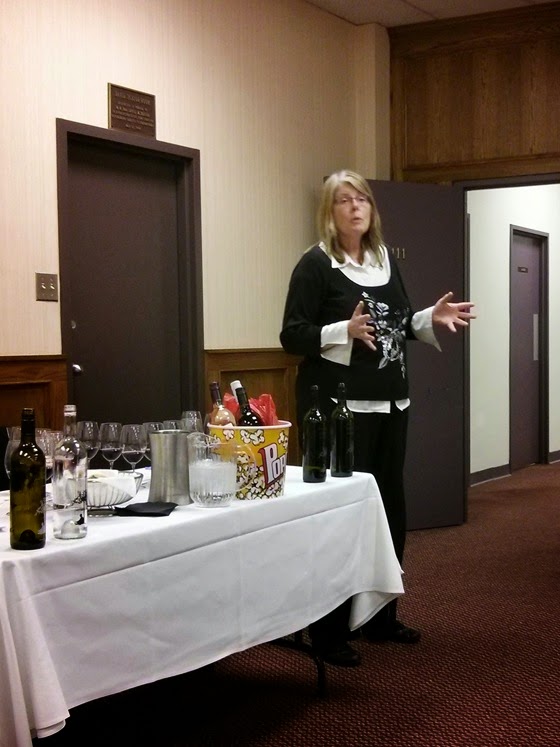
Judy Kingston describes her exacting standards

While Serendipity may be boutique in size, Judy has thoughtfully incorporated several key grape varieties, which she has grown from “infancy” in her own nursery. In fact, during the first harvest the thriving nursery was nearly forgotten about. In yet another serendipitous moment that diverse collection of red grapes was ultimately made into a Rosé. As with the Viognier, Judy was pleased to share with us the 2012 Rosé, plus a 2013 tank sample. From a blend of Merlot, Cabernet Franc, Malbec, Pinot Noir, and Syrah we enjoyed earthy, strawberry-rhubarb aromas and a clean, red berry and pomegranate palate. The 2013 sample was very similar, just that much fresher and livelier. By blending so many grapes to yield multiple flavours Judy ensures versatility, in that no one characteristic dominates any potential food pairing, and the wine works with a range of cuisines.

As we enjoyed the wines Katie also chimed in on occasion with her unique perspective. Now a vested member of the winery team – having abstained from a career in law – Katie has been working closely with her mother since finishing her undergraduate education in biology. At one point Katie took pleasure in telling us about her being roped into facilitating natural pest management during her summer visits, as the winery was being established. While her peers were enjoying Naramata beach parties Katie was spending her evenings in the vineyard alongside her mom, manually “squishing” cutworms! (Judy strives to avoid spraying her grapes, in order to retain beneficial insects.) At Katie’s urging, they tried an alternate remedy for cutworms she’d read about – spreading hot sauce around each vines’ base. Unfortunately an experiment indoors with some live specimens showed the worms simply lapped it up without harm, so back to squishing they went!
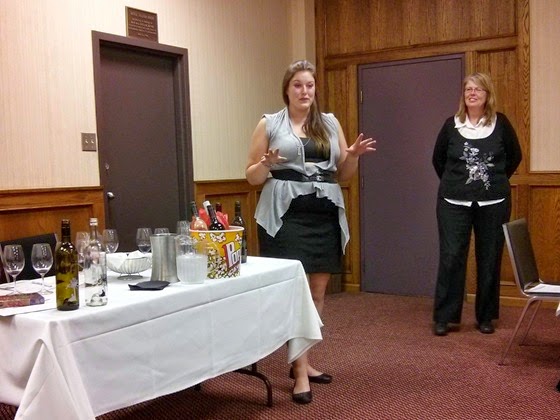
Katie O'Kell details her nights in the vineyard

Although Serendipity also produces a Sauvignon Blanc varietal wine and a white blend (called “White Lie”), we spent the remainder of the evening focusing on the many reds on hand. Originally Judy had intended on producing only one red Bordeaux-style blend, but that clearly didn’t pan out, as we had no less than three blends in front of us! The superb value “Red Handed” 2010 is a Meritage blend with the addition of Syrah and Pinot Noir – all of the red grapes Judy grows. I thoroughly enjoyed the delicious aromas of milk chocolate, cherries, and vanilla, which led superbly into flavours of berry fruit and chocolate. Given that this newly bottled wine will retail for only $18 it seems like a steal!

The “Devil’s Advocate” 2010 came next, and again centered on a red Meritage blend with a little something extra. In this case the extra comes from 30% Syrah, leading to toasty aromas of leather and eucalyptus. The bright, peppery palate was very tasty – and like the Red Handed seemed almost sweet from the intense fruit. Judy hasn’t shied away from entering her wines in competition, and the Devil’s Advocate has achieved some prominent medals, including Silver from the Canadian Wine Awards, All Canadian Wine Championships, and the San Francisco International Wine Competition.

Two mini-verticals of newly released and upcoming reds continued the excitement, beginning with the original intended red blend, “Serenata”. Although Serenata 2008 was one of Judy’s very first wines, it was the 2009 that included her first estate grapes, and which we were set to enjoy. This straight red Meritage includes some other Naramata Bench grapes as well, and came directly from Judy’s library – only 21 cases were produced! The complex palate showed more tannin and darker fruit than the earlier two reds, but all in superb balance with acidity and oak. This was followed up with the new 2010 Serenata, featuring Serendipity’s special Calgary Stampede bottle design (including Isaac Newton wearing a cowboy hat). After the Devil’s Advocate was featured in the Stampede’s wine program last year, the Serenata is headed there for 2014. Calgary restaurant-goers can look forward to another finely balanced wine with a delicious, fresh nose and great food-friendly acidity. Fortunately 450 cases were produced this time around!
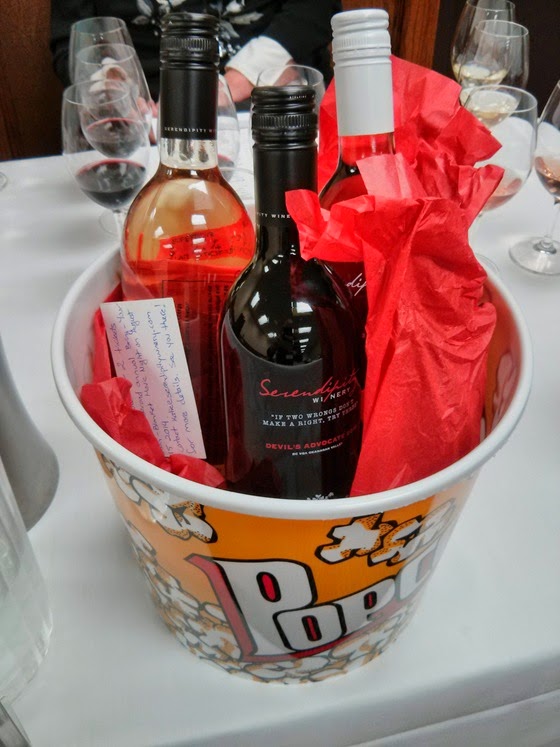
Serendipity Movie Night Gift Basket

Joining the Serenata in Calgary will be the 2010 Syrah, a smooth, spicy wine with a hint of smoke to ensure ideal barbecue pairing. The Syrah was our final wine, preceded by the 2009 vintage of the same, a similarly spicy, ripe treat showing hints of brown sugar on the palate. Only 40 cases of 2009 Syrah were produced, but Judy managed to increase production to 95 cases in 2010, still a meagre amount by any standard, so it likely won’t last long!

So many wonderful wines and stimulating stories provided an excellent introduction to an up-and-coming winery. If you couldn’t make it to the tasting be sure to keep your eyes peeled for Serendipity at your nearest wine store, or visit Judy, Katie, and the rest of their growing team in Naramata someday soon!

Friday, 7 March 2014

BC Paired Luncheon at VIWF 2014

The closing weekend of the Vancouver International Wine Festival includes numerous thematic luncheons highlighting regions or wine styles/varieties. I often favour the “BC Paired” lunch organized by the BC Wine Institute, showing off dozens of VQA wines from nearly every BC winery attending the festival. This year’s event witnessed a new venue at the Fairmont Pacific Rim, home of ORU Restaurant. A last-minute change from the Restaurant itself to an upstairs ballroom did nothing to diminish the menu from Executive Chef Darren Brown. As it turned out, the Fairmont’s ballroom was beautifully appointed, and featured expansive views of the north shore and the sleek Convention Centre – more than sufficient for the task at hand!

Fairmont Pacific Rim's superb space

Upon arrival, my wife and I found a generous food spread in the centre of the room, with wineries wisely spaced around the perimeter. A very active risotto station was busily plating ramekins of seafood fennel and foraged mushroom versions. The provided pamphlet and guide included the full grazing menu (with suggested wine pairings), but to be honest I saw very little of the proffered delights: guests descended on the food with rapidity and I made the choice to focus on wine tasting in the limited time available. Quick passes gave me a chance to enjoy at least a couple of the many delicious table hors d’oeuvres: Truffled Bruschetta, Roasted Baby Beet Salad, Crostini Bufala Margherita, Wild Mushroom Arancini, Duck Confit Rillette, Dungeness Crabcake, Braised Ancho Shortrib, Qualicum Beach Scallop, Sake Miso Sablefish, and Cotechino Meatballs were snatched up with vigour by those in attendance. Oft-refreshed artisanal cheeses provided for additional pairing opportunities, including riches from Moonstruck, Salt Spring Island, Natural Pastures, Golden Ears Cheesecrafters, and Poplar Grove.

Bench 1775's zippy Gewurztraminer

I admittedly didn’t make it to all of the twenty-four tables – representing nearly every one of the twenty-seven BC wineries attending the Festival – and took an approach much more random than methodical. Each winery was pouring two wines, often unique from those poured in the afternoon and evening Festival Tasting Room sessions. Overall the focus seemed to be aimed more closely at value-driven, food-friendly wines, rather than the rarities and icon bottles opened in the Tasting Room. A couple of 2012 Gewurztraminers started things off nicely, including a surprising and quite tasty lime-dominated, creamy version from Bench 1775. Nearby, Haywire took aim at the perfumed side of the grape, and their clean and delicate Gewurztraminer helped illustrate the range of styles that can be produced.

Taliesyn & Steven show off Gray Monk

At the Gray Monk table family proprietor Steven Heiss was pouring a pair of opposites alongside Charton-Hobbs Representative Taliesyn Huxtable. The winery’s 2012 Pinot Blanc was showing crisp orchard fruit flavours and a hint of light spice on the fuller body. With 15 grams of residual sugar it’s not dry, but bright acidity ensures balance. At more than twice the price, the 2010 Odyssey Meritage ($35) represented the other end of the spectrum. The big red comes courtesy of grapes from Harry McWatters’ Black Sage Road vineyard, and is pleasantly approachable now, with smooth dark fruit and hints of red bell pepper and even some black pepper. Since a direct comparison to Gray Monk’s Meritage was mere steps away we tried out Jackson-Triggs’ 2010 Sunrock Meritage, from vineyards even further south. The Osoyoos Merlot component jumped out immediately with the olive aromas I tend to associate with the region; and burnt sugar flavours yielded a sweeter palate than Gray Monk’s version.

A full Merlot from further north, on the Golden Mile side of the valley, came in the form of Hester Creek’s 2011 Reserve. The block-specific designation that began with the winery’s Cabernet Franc has been extended to the Merlot, which comes from Block 2, planted in estate vineyards nearly four decades ago. Aromas of toast and jam led into a smoky palate showing the prominent use of oak I’ve come to anticipate from Hester Creek. To refresh our palates we sipped from the winery’s 2010 Character White, a proprietary blend that surprised us with a fuller palate than expected given the light, tropical nose.

Rich new reds from Painted Rock

By the entrance to the room was John Skinner, proudly showing off his brand new 2011 red wines from Painted Rock. While John was only pouring his Merlot and Syrah, I recently got the chance to taste the new Cabernet Sauvignon and Red Icon as well. All the 2011 wines possess a bright, youthful acidity that amplifies the fruit flavours. The Merlot’s expressive, fruity nose flows nicely into fresh blueberry flavours, and the Syrah impressed us with particularly fresh fruit – cherries and red plums – followed by leather, toffee, and white pepper characteristics. (Tasting the Cabernet revealed elegant leather and mint, and the Red Icon is enjoyably rich and spicy, led by 30% Malbec in this annually-unique blend.) The manageable tannins throughout Painted Rock’s 2011 wines make them drinkable already while the fruit is so expressive, but the acidity promises healthy aging potential to allow for the development of additional complexity.

Reds and whites from Poplar Grove

On the other side of the room Poplar Grove was showing off some rarities, in contrast to the more widely available wines on offer at most of the tables. The 2012 Viognier (soon to be replaced by the 2013 vintage) was one of the highlights of the event for us, with mouth-watering tropical, vanilla aromas and a rich citrus palate. It was actually challenging to pick out many unique characteristics from this well-rounded, mouth-filling wine; we just knew we wanted more – too bad it’s winery-exclusive (with just 400 cases produced)! Similarly challenging to acquire is the 2009 Cabernet Sauvignon, which showed deep, dark fruit flavours of raisins and dates. Despite its rusty colouring the wine could benefit from additional aging given still-noticeable tannins – alcohol approaching 15% will certainly help to preserve this big wine for years to come.

Howard Soon shows the Sandhill joy

At the nearby Sandhill table Winemaker Howard Soon was more than happy to pose for a few pictures, while pouring juicy 2011 Merlot and a big, flavourful 2012 Pinot Gris. The well-rounded white had layers of tree fruit flavours covering apple, pear, and peach, plus notes of fresh grapes. Of particular reason to rejoice was the news that Sandhill will be opening an expansive new tasting room in a few short weeks. The dark, cramped boutique attached to the Calona Winery in Kelowna will be replaced by a newly renovated space next door that will do wonders to better show Howard’s many superb single-vineyard wines. Renderings show an open, airy room with natural light and original wood beams, plus much improved exterior signage – I can’t wait to visit in person soon!

Jane Hatch's Tantalus pride

From another Kelowna champion, Tantalus’ General Manager Jane Hatch had the winery’s internationally celebrated Riesling open to share. The 2012 vintage was showing just a hint of earthy petrol on the attractive nose, with flavourful lime and hints of vanilla following through on the palate. After a long, clean finish we happily tried out the 2011 Chardonnay as well, where the creamy palate and McIntosh apple flavours made for similar satisfaction. In discussing the upcoming 2011 Old Vines Riesling (enjoying limited pre-release at the Festival) Jane shared that it was – in her opinion – the best vintage ever of this extremely popular wine. Even though the Old Vines version is typically released two years later than the regular Riesling, it can still improve with additional bottle aging, up to several years (from vintage) according to Jane. I was certainly left pleased to have already obtained a couple bottles from the on-site Festival store.

Harry McWatters spends TIME with daughter Christa-Lee

While many northern hemisphere wineries, BC included, poured their 2012 whites at the Festival, Harry McWatters risked bottle shock and opened his TIME Estate Winery 2013 White Meritage. The blend of Sauvignon Blanc and Semillon appeared no worse for wear despite being only five months from harvest (and just a few weeks in bottle), with creamy vanilla and grapefruit on the nose, and tropical fruits like starfruit and kiwi coming across on the palate. At Harry’s side was his daughter Christa-Lee, helping to show a slightly more mature release in the form of rich 2011 Red Meritage (released last year). A fruit-forward nose and bright palate trended towards darker fruit after more consideration, while youthful tannins make for myriad food pairings and/or several additional years of potential aging.

Before departing for the afternoon Festival Tasting in the Convention Centre we made sure to stop by Tinhorn Creek’s table. Viticulturist Andrew Moon was happy to pour samples of the winery’s 2012 Pinot Gris, just as the new 2013 is appearing on store shelves. The additional age on the nicely dry 2012 vintage hasn’t diminished it whatsoever, as the wonderful creamy texture remains in force – thanks to 30% Malolactic fermentation and two months of lees stirring. Fortunately, precisely the same treatment was applied to the 2013 vintage, which should be equally enjoyable over the coming months. We couldn’t resist a few sips of 2011 Cabernet Franc either, released last August and currently a rarity in local stores. I always enjoy the refined flavours of Winemaker Sandra Oldfield’s Cabernet Franc: red berry fruit (think raspberry seeds) with hints of leather, toast, and even some licorice.

There were many more wineries and wines present from which we didn’t manage to sample, but I’m glad to have made it to some long-time favourites, and to have caught up with some old friends. Included among those people are the great Communications and Marketing staff at the BC Wine Institute, who have graciously hosted me at the BC Paired Lunch for three years running. Many thanks to the Wine Institute, the Wine Festival, and to Heth PR for facilitating my media pass to the Lunch!

Monday, 3 March 2014

BC Sparkles at VanWineFest

There was no mistaking that France was the theme region at this year’s Vancouver International Wine Festival: dozens of spectacular Champagnes on offer provided for ideal synchronicity with the varietal focus on sparkling wine. I certainly enjoyed tasting through the wares of France, including delicious Champagne and Cremant, plus some spectacular gems from the Rhone in particular. My pass for all three days of the public Tasting Room allowed exploration of every international wine region represented, with special attention paid to the many wonderful wines from right here at home. With the focus on bubbly, at least nine of the twenty-seven BC wineries present in the Tasting Room had something to contribute in that respect – I tasted seventeen different sparkling wines in the BC section alone!

Christie Mavety shows of Blue Mountain Brut

The fun started with one of BC’s most venerable sparkling wine producers: Blue Mountain Winery of Okanagan Falls makes four different bubbles as of their recent introduction of two new vintage wines to an already-impressive range. Sales & Marketing Manager Christie Mavety was excited to be pouring her family’s “Gold Label” (Non-Vintage) Brut to start. This bottle is a feature on wine lists across the province, and the bright flavours, yeasty mousse, and long finish make it food friendly in almost any context. The 2009 Rosé Brut particularly impressed, with a wonderfully fresh and clean strawberry palate. Lastly, for the afternoon Trade Tastings Christie shared the 2006 Blanc de Blancs, a softer, more mellow and thought-provoking wine showing layers of apple flavours and even further food-pairing opportunities. The complex 2005 Reserve Brut is already sold out, and hence unavailable at the Festival, but would complete the quartet – fortunately I have one precious bottle at home to enjoy in the future!

Gray Monk's Brut continues to please

Moving down the alphabetically-sorted row of wineries I soon came upon the table of Gray Monk, another family-owned winery which has included sparkling wines in their broad portfolio for some time. Dawn Heiss was behind the table introducing guests to the new vintage of the winery’s Rosé Brut, a blend of Pinot Noir and Pinot Meunier with additional Gamay Noir, produced in the traditional method. The 2010 Rosé comes across on the sweeter side, but still food-friendly with a creamy palate and a superb value price of only $20. Partner to the Rosé is the White Brut, a blend of Pinot Blanc, Chardonnay Musque, and Riesling, still produced in the traditional method using secondary bottle fermentation. Expecting a sweeter wine I was quite surprised at the dry, crisp character in the glass, with clear contributions from the Riesling in particular. Higher acidity and lower sugar than the Rosé make for a very versatile wine – and it’s often found in magnums!

Dawn Heiss helps the Rose Brut sparkle

Just around the corner Summerland’s Okanagan Crush Pad was represented by their house winery, Haywire, pouring samples of the slick, crown-capped, traditional-method bubbly “The Bub”. The brand new 2012 vintage was being flaunted by one of OCP’s consulting winemakers, Matt Dumayne, with whom I was quite pleased to catch up (since last fall’s BCWAS Perseus Tasting) and compliment the excellent wine he was pouring. In retrospect, this Pinot Noir & Chardonnay blend was the most fruit forward BC sparkler I tasted at the festival, and I look forward to enjoying more than a few bottles over the course of the next year! (A Rosé version made using red-wine dosage should be equally good, albeit harder to acquire, with only 100 cases produced.)

At the other end of the size spectrum was Jackson-Triggs, back at the Festival after a year off in 2013. Amongst other wines, the “Entourage” Sparkling Chardonnay was available for tasting, remaining consistent with my last experience tasting the 2008 vintage a couple of years ago. Although crisper than I expected given my bakery-fresh recollection, the newer 2009 vintage has retained the bready aromas and baked fruit flavours I enjoyed the last time.

Jackson-Triggs Entourage Sparkling Chardonnay

The Naramata Bench was represented in the sparkling department by Lake Breeze, pouring their vibrantly-named “Zephyr” Blanc de Noir, a traditional method bubbly from the winery’s very good Pinot Noir grapes. A nose of sweet strawberries and a tart, lively palate made for an easy-drinking, enjoyable wine. Most guests would be forgiven for their surprise that Lake Breeze even makes a sparkling wine, given the small quantities produced, and the fact that it appears to be sold out at the winery! My compliments to Lake Breeze for dipping into their library in order to bring the wine to the Festival, and to make it available for sale in the on-site store.

From the other side of Okanagan Lake, back in Summerland, Sumac Ridge’s “Steller’s Jay” sparkling house was naturally present, with all three wines currently produced on offer. As corporate owner Constellation Brands did with Sumac’s Black Sage Vineyard line of wines, Steller’s Jay is now a seemingly independent brand, although lacking a web presence thus far. The reliable, thoroughly-awarded Brut maintained the traditional method wine’s solid reputation, with a clean, refreshing palate on the most recent 2008 vintage. Non-vintage Sparkling Gewurztraminer was an entertaining treat, showing soft fruit and a sweet finish – I’ve heard it suggested as a great sushi pairing. Finally, the 2005 “Pinnacle”, a Blanc de Noirs aged en tirage for four years came across as more of a complex, solo sipper. It struck me as lower in acid than the Brut, but drier as well to maintain a good balance, with generous brioche and apple flavours.

Zephyr Brut boosts Naramata's sparkle

Steller’s Jay was joined in the big bubbly players category (alongside Blue Mountain and Gray Monk) by Summerhill, pouring no less than four different sparkling wines – and only sparkling – at the Festival. Although the Kelowna winery produces a full range of white and red table wines, they took the varietal focus quite seriously indeed and brought along non-vintage Cipes Brut (white and Rosé versions), an early-release 2008 vintage Blanc de Noirs, and the epic 1998 Cipes Ariel. The standard Cipes Brut is a blend of Riesling and Chardonnay, somewhat sweeter than Gray Monk’s similar wine, but just as refreshing. The Cipes Rosé, from 100% Pinot Noir, was recently named amongst the Top 10 wines at the 2013 Effervescents du Monde competition; I certainly enjoyed the juicy berry fruit flavours. The Blanc de Noirs is not yet formally released, and came bearing a temporary but straightforward label, plus a complex and mature flavour profile I look forward to enjoying again upon release. Lastly, I was very excited to try my first sip of Cipes Ariel, which at $85 after 15+ years of age is not too common, nor opened too often: a beautiful amber-gold straw colour revealed an intriguing nose and palate that seemed almost savoury in nature, but ultimately inspired me to liken it loosely to “sparkling Madeira”!

Summerhill provides sparkling for every occasion

To cover every BC sparkling wine available I made sure to stop by two more tables. At the first, in between Steller’s Jay and Summerhill, Stoneboat Vineyards was pouring the second release of their “Piano” Brut, a unique Charmat-method wine produced from Pinot Blanc and Muller Thurgau grapes. I’ve tried the wine a few times since the first release at last year’s Wine Festival, and this bottling seemed drier from what I could recall. General Manager Tim Martiniuk assured me that it contains the same proportion of residual sugar, but this batch was aged a bit longer than the first, and hence the immediate fruit flavours are slightly tempered.

At the very end of the BC section was young Vancouver Island winery Unsworth Vineyards, established in the Cowichan Valley in 2009 by Tim and Colleen Turyk. It’s rare that such small (but growing) wineries as Unsworth formally attend the Festival, given the nearly prohibitive costs. As a result, I was excited to see them, particularly given the presence of their 2010 “Cuvée De L’Ile” traditional-method Blanc de Noirs. Only 355 cases have been produced of this Pinot Noir-based wine, aged on the lees for two years, and now ready to enjoy. I enjoyed the vibrant nose and yeasty palate, which seemed to lean towards an old-world French style (contrary to some of the lighter, more fruit-forward wines from elsewhere in BC). With so much great French Champagne in the room just steps away I’m sure Unsworth found themselves in great company!

Having enjoyed a delightful range of sparkling styles and flavours I couldn’t help but consider the wines and wineries missing from the Festival. Only a handful of local wineries attend consistently every year, as doing so represents a significant investment, so several notable BC sparkling wines were missing in action. Most immediately apparent was the lack of Road 13’s celebrated Sparkling Chenin; the Golden Mile winery had just attended last year and so quite fairly opted out this year. Blasted Church was also unable to attend, but their new traditional method “OMG” sparkler would have no doubt impressed the crowds. I also sorely missed some of my favourite frizzante-style wines, including Orofino’s Moscato, and the popular “Integrity” and “Confidence” from Summerland’s 8th Generation Vineyard. Ironically, while Kelowna’s Tantalus was in attendance, they simply didn’t have enough of their sold out Old Vines Riesling Brut to commit to the Festival. Fortunately, the Regional Tasting Station operated by the BC Wine Institute was pouring the Riesling Brut, along with other rarities from wineries unable to attend, including Backyard Vineyards’ Blanc de Noir, the finely-crafted Sparkling Chardonnay from Bella Wines in Naramata, Noble Ridge’s “The One”, and Sperling Vineyards’ vintage Brut from Kelowna.

I stopped by the BC Regional Station several times to enjoy the ‘bonus’ wines as they were rotated through. With two dozen BC sparkling wines available to sample throughout the Tasting Room and nearly one hundred more from across the world I was kept busy enlightening my palate. My thanks to the Festival management and to the very competent team at Heth PR for facilitating my media credentials and access to the Tasting Room. I’m already eagerly awaiting the 2015 Festival, which celebrates the wines of Australia and a focus on what should be some superb local and international Syrah!

Saturday, 22 February 2014

BCWAS Cabernet Franc Blind Tasting

With memories of last year’s successful Syrah blind tasting still fresh, the BC Wine Appreciation Society made the wise decision to continue what may become an annual tradition this month. This year the focus fell on Cabernet Franc, given growing enthusiasm for, and quality of, this sometimes overlooked varietal, particularly here in BC. A dozen local and international examples were collected, and legendary wine writer John Schreiner agreed to lead the tasting; although I’m sure well-known Cabernet Franc enthusiast Sandra Oldfield would have jumped at the chance if only her travel schedule had allowed it.

Given that Cabernet Franc ripens at least a week before Cabernet Sauvignon, and often two weeks earlier, it is ideal for cooler climate regions that struggle with under-ripe Cabernet Sauvignon. The majority of the world’s Cabernet Franc ends up in red blends, but an increasing number of BC wineries are finding success with single varietal bottlings, particularly Oliver winery Tinhorn Creek, owned by the aforementioned Sandra Oldfield. Led by Sandra as Winemaker Tinhorn has produced a single varietal Cabernet Franc for nearly two decades, extoling the virtues of the grape enthusiastically along the way. Tinhorn is almost certainly the only local winery producing three unique Cabernet Franc wines, including a Rose, and the recently-released reserve-tier, “Oldfield Series” version.

Tinhorn's Triplets

Naturally Tinhorn Creek’s “Oldfield Series” 2010 Cabernet Franc was a must for the tasting, and we were lucky to get some considering fewer than 400 cases were produced. Bottles from a few more BC wineries well-known for their success with the grape were natural additions as well. Burrowing Owl was awarded a Lt. Governor’s Award for their 2010 vintage last year, so adding the recently-released 2011 was only natural. From Tinhorn’s neighbour Hester Creek we managed to obtain the actual 2010 vintage that also brought home this highest award for BC wine, and the same for the 2009 release from Poplar Grove (who also won the Award in 2005 for their 2002 ‘Benchmark’ Cabernet Franc).

Also included in the local line-up was the estate-tier 2010 from Church & State, one of the few wineries producing more than one Cabernet Franc (their small lot “Coyote Bowl” series wine is very popular). Additional Golden Mile wineries – more Tinhorn neighbours – were represented by Cassini Cellars’ and Fairview Cellars’ 2011 vintages, both from small lots of only 400 and 280 cases respectfully. Rounding out the BC contribution was the first varietal Cabernet Franc from new Penticton winery Perseus, also coming to us from the 2011 vintage.

Schreiner Makes Introductions

With twelve seemingly identical and unidentified glasses in front of them, guests took time to consider the task ahead of them while John Schreiner introduced us all to the evening’s grape star. He was quick to quote figures from the most recent BC vineyard census, and the Grape Crop Report, showing over 500 acres of Cabernet Franc in BC (as of 2011), with 1,371 tons reported harvested in 2012, finally edging out Syrah. John recounted the uncertain history of the grape, which may have emerged from the Basque region in the 12th century (as told by Jancis Robinson), but then again maybe not at all, according to others! He was clear that the full history of the grape will likely never be accurately known.

As the tasting got underway, those present were asked to rank their Top 5 preferred wines on the provided ballots. It soon became evident that even settling on five wines would be a challenge, with so many similarities between them – berries, spice, and minty notes emerged frequently. In time I was able to narrow down some favourites, and noticed I tended to favour fruit-forward, fresh, bright wines over those with heavier oak and savoury elements. Finally after a great deal of swirling and sniffing the ballots were collected and analyzed using a Borda Count spreadsheet. The judges settled on a ranking based on a 12-point system, and returned to enlighten the expectant crowd.

Red, Red, and more Red

The unfortunate last place wine was soon revealed to be of French pedigree, from Domaine Bernard Baudry in the Loire Valley. With only two out of 49 ballots even mentioning this wine it clearly didn’t find favour with the crowd, likely due to a significant brettanomyces influence. Another outsider that fared surprisingly badly was the unusually cloudy wine from Ontario’s Vineland Estates in Niagara, which sadly may have suffered some low-temperature damage during transit across the winter-locked country.

The point scores jumped up for the next few wines, starting with Cassini’s newly released, tart, and youthful 2011, only the second year in which Adrian Cassini has produced a varietal Cabernet Franc (the first release being a very small lot of 85 cases from the 2009 vintage). From a few minutes up the road, the ninth place wine came from Bill Eggert at Fairview Cellars, showing cool raspberry and fruit leather. Ironically Bill focuses on, and is much better known for his Cabernet Sauvignon, but depending on the blend of his “The Bear” Meritage, there can be enough Franc left over for a varietal wine, as was the case in 2011.

The Bottom Bracket

Another outsider wine came next, and this time fared moderately well, with California’s Cosentino coming in eighth. This young wine from the 2012 vintage was one of my favourites in fact, showing a very aromatic expression of fresh raspberries on a light, refreshing palate. This was followed (and essentially tied) in the rankings by Hester Creek’s smoky 2010, plus Church & State’s good value 2010 – unfortunately now sold out, as the 2011 vintage has emerged on store shelves.

The scores jumped up again to put Perseus in fifth place, with a charming wine made from Similkameen Valley grapes by former winemaker Tom Di Bello. Next, a one-point difference and virtual tie between the fruity finish of Burrowing Owl’s new release 2011 and Poplar Grove’s mature 2009 filled out fourth and third place respectively. With only two bottles remaining the final international wine was finally revealed: in second place, Argentina’s Trapiche winery clearly impressed the crowd with a light, easy-drinking, enjoyable example of the varietal.

The Top Tier

I ranked the Trapiche in my top five in fact, just behind the wine that eventually came in first – the 2010 “Oldfield Reserve” bottle from Tinhorn Creek. Ironically the Trapiche and the Tinhorn could not be further apart, both in price and in style: Sandra Oldfield’s first reserve Cabernet Franc showed a full-bodied palate rich in dark fruit, elegant complexity, and a long, spiced finish – much more cerebral than the quaffable Trapiche. Although Tinhorn bottle-ages all of their Oldfield Series wines before release, this one could certainly continue to develop with additional years in the cellar.

Overall Rankings

1.  Tinhorn Creek “Oldfield Series” 2010 ($35 – Sold Out)
2.  Trapiche “Broquel” 2009 ($19) - Argentina
3.  Poplar Grove 2009 ($35)
4.  Burrowing Owl 2011 ($28)
5.  Perseus 2011 ($30)
6.  Church & State 2010 ($25 – Sold Out)
7.  Hester Creek “Block 3 Reserve” 2010 ($29 – Sold Out)
8.  Cosentino Lodi 2012 ($27)
9.  Fairview Cellars 2011 ($30)
10. Cassini “Collector’s Series” 2011 ($29)
11. Vineland Estates Reserve 2010 ($40)
12. Domaine Bernard Baudry 2010 ($26)

Clearly these wineries, and many more, are doing a great many things right with this grape. Including so many top-tier local examples in a blind tasting such as this was an incredibly valuable opportunity. Speaking with guests I could tell everyone enjoyed what was a very entertaining and educating seminar on this fascinating grape with a big future!

Sunday, 26 January 2014

January Wine Dinner: Winter Whites

It’s been too long since our last wine club dinner, so last weekend an augmented group of eight brought together our best homemade culinary creations with a great many bottles of BC wine once again! Normally we hold these dinners with six people – three couples – who each contribute one course and a wine pairing. However, there was so much good cheer (and miraculously easy scheduling) going around we brought some other friends on board as well. It didn’t hurt that our hosts have a wonderfully large table that can seat eight, or even ten in a pinch.

With our hosts putting together the entree course, and my wife and I devoted to dessert already, there was little opposition to a duo of starter courses from the other two couples. Our appetizer chefs actually coordinated with one another to avoid duplication, but we reminded them that this wine club requires no advance planning – and it’s always worked out wonderfully in fact. Case in point: without anyone planning it or notifying others, we all brought white wines this time, once again yielding an unintentional theme.

Howling Bluff Sauvignon Semillon & Spinach Salad

The first course was soon revealed to be an attractive spinach salad, accessorized with red onion, toasted hazelnuts, dried cranberries, and a homemade balsamic dressing. To pair with it was Howling Bluff’s superb 2012 Sauvignon Blanc Sémillon, with sufficient – balanced – acidity to stand up to the onions and tart dressing. The wine’s fresh floral nose still reminds one of summer even in winter months, and tropical flavours like star fruit kept us intrigued while pear and hints of cedar and mineral also showed up on the finish.

We continued to sip the Sauv-Sém and catch up while Round Two was put together with earnest in the kitchen. The intoxicating aromas of butter and herbs got us all wondering, while we were tasked with choosing which of two wines to enjoy next. Burrowing Owl’s 2011 Pinot Gris was deemed the best pairing for the extremely rich Ricotta Gnudi with which we were soon gleefully presented. A brown-butter sage sauce and crumbled fresh Romano made these little hybrid dumplings shine. The full-bodied, creamy Pinot Gris was an excellent match, with flavours of apples and pears, and a tart finish that cut through the buttery food pairing.

Burrowing Owl Pinot Gris & Ricotta Gnudi

Despite the surprisingly filling gnudi, there was plenty of food and wine to come, particularly the Indian-inspired feast our hosts had assembled. Butter Chicken and Butter Tempeh were accompanied by authentic Aloo Gobi, Quinoa-Wild Rice Pilaf, fresh Chickpea Salad, and Naan Bread. It was dangerously tempting to load up on everything, even three courses in, especially the rich, flavourful, vegetarian-friendly butter tempeh.

An Indian-inspired Vegetarian Feast!

Such a bounty of food called for plenty of wine, and our hosts had acquired two bottles each of Dirty Laundry’s “Say Yes” 2012 Pinot Gris, and Thornhaven’s 2012 Gewürztraminer – more than enough to go around! The beautifully-bottled Say Yes was actually the sweeter of the two wines, with slight floral aromas, tropical pineapple flavours, and a full-bodied texture thanks to fairly high sugar. The Thornhaven really shone alongside the spicy food, with textbook floral, sweet lychee aromas, and superb balance. Thornhaven is legendary for their Gewürztraminer, winning top medals and Best of Class awards every year, such as the Gold last fall at the BC Wine Awards (along with another Gold for the winery’s 2011 Syrah).

Thornhaven Gewurztraminer & Dirty Laundry Pinot Gris

We all had to hold off on serving too many second helpings, as a rich closing course was on the way. My wife and I had prepared dessert in advance, needing only to pop it in the oven when the time was right. While awaiting tell-tale baking aromas, we all sipped from Team Gnudi’s second bottle, a charming Riesling from La Frenz they had obtained at the winery during a visit last summer. With a fresh citrus nose and no earthy/petrol aromas as of yet it made for a superb palate cleanser. Lots of lemon-lime and mandarin orange flavours were accompanied by a tart finish balanced with just enough residual sugar.

La Frenz Riesling

After a great deal of eying, checking, and even some poking, dessert was finally out of the oven and ready to serve. It was quite a process to ensure our individual Molten Chocolate Lava Cakes were sufficiently cooked to come out of their ramekins neatly, yet retaining that ethereal moistness necessary for full enjoyment. A dusting of powdered sugar, some fresh whipped cream, and a few drops of homemade cherry coulis rounded out the plating with pride, before we cracked open a bottle of Nk’Mip 2012 Qwam Qwmt Riesling Icewine.

Although long a successful wine for this Nk’Mip, the 2012 vintage of their Icewine has recently been burning up the airwaves thanks to a 100-point review from John Schreiner. A striking 93-points from Anthony Gismondi and inclusion in his semi-annual list of the Top 10 Wines of British Columbia haven’t hurt matters either. In fact, Gismondi’s review suggested serving this elegant gem with chocolate, so the Lava Cakes seemed an ideal pairing for such a striking wine. Even with rich cocoa aromas filling the room the intense, vibrant nose of the wine stood out, with a basket of tropical guava and lychee aromas jumping forth. The tart acidity deftly cut through the cake, showing extremely pure honeyed mandarin flavours that lasted for ages. I’m definitely looking forward to adding another bottle to my cellar for a bit of aging, if I can keep my hands off of it!

Nk'Mip Icewine & Chocolate Lava Cake

To finish off the evening in style I broke out a rotund little bottle of Saxon Winery’s VIP Port-style fortified Pinot Noir. I picked up a couple bottles last fall during the BC Wine Appreciation Society Bus Tour, which was based in Saxon’s home community of Summerland. Two years in barrel and fortification with Foch Brandy have yielded a surprisingly spicy wine that everyone enjoyed. In particular, the lower sugar than expected and some meaty hints beyond the cinnamon and nutmeg flavours provoked plenty of commentary; the smile-inducing “grapey” finish was just icing on the cake.

Saxon VIP Fortified

We all left sufficiently stuffed and feeling very learned about several new wines; I was particularly pleased to share the Icewine and Port-style with everyone. Thanks to the enthusiasm and generosity of everyone involved I’m sure we’ll do it again soon!